Description
Equipment Overview
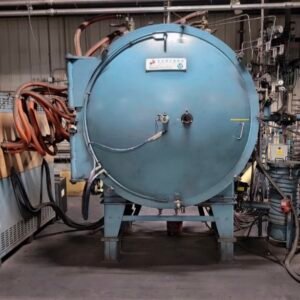
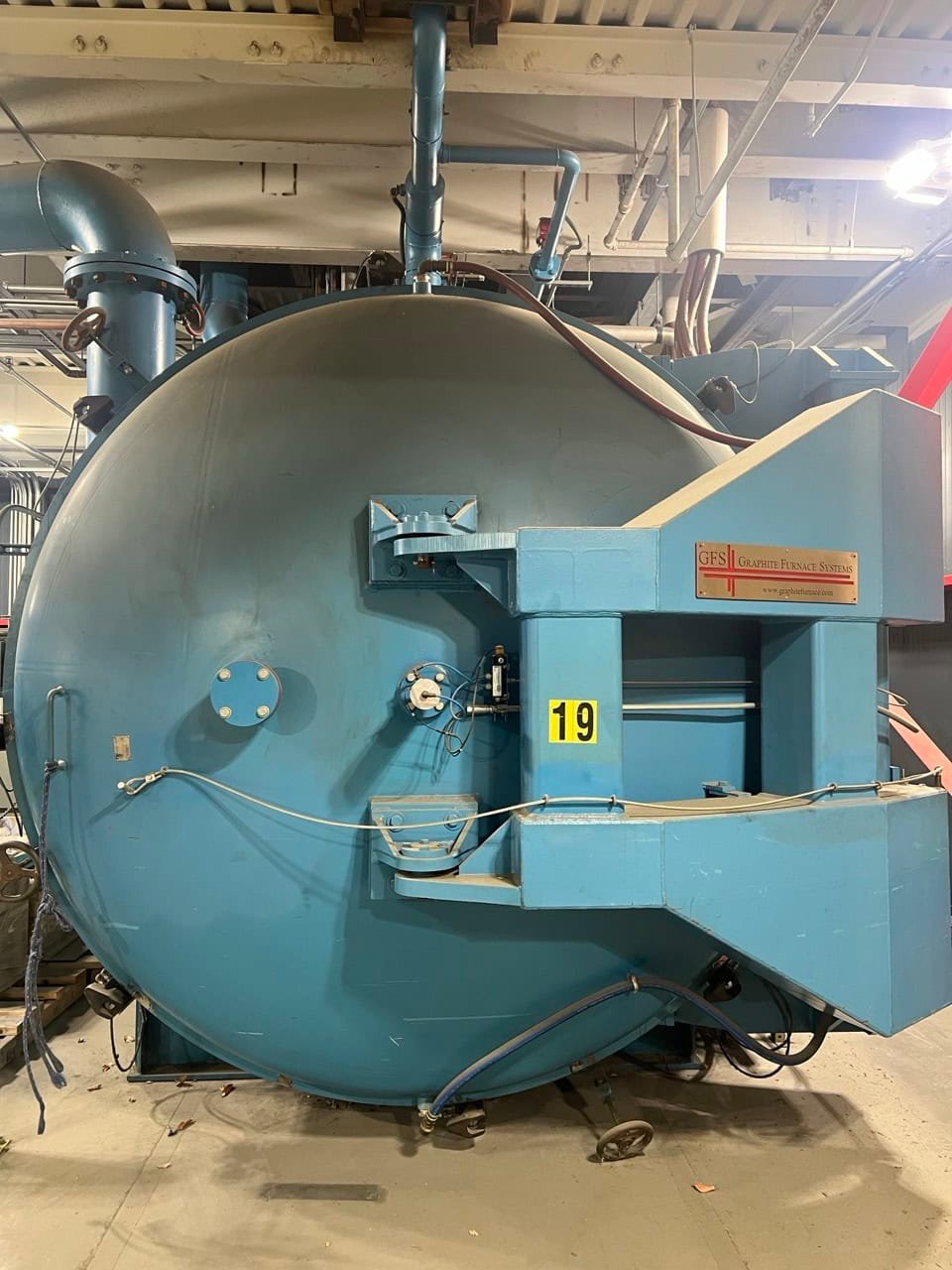
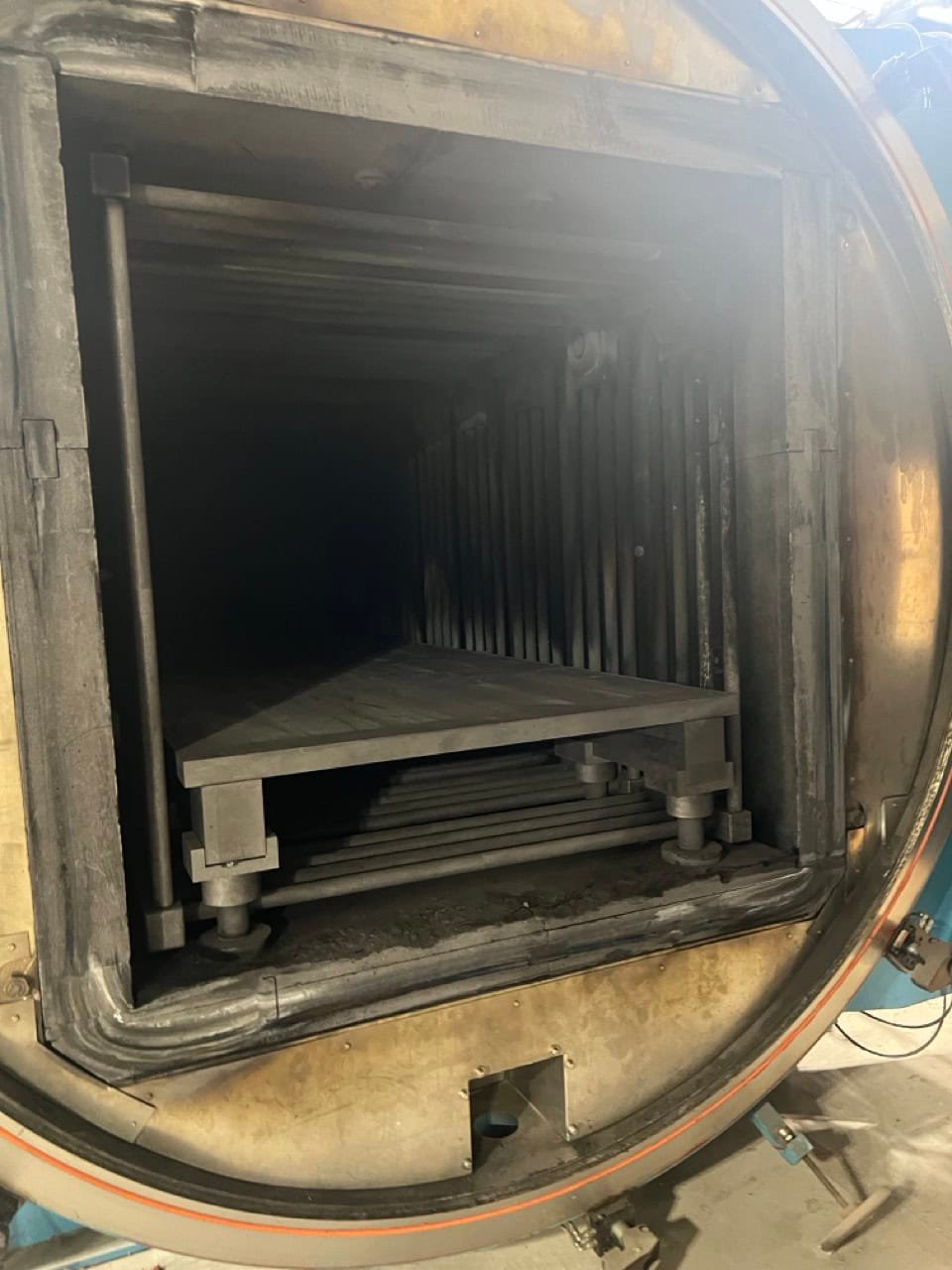
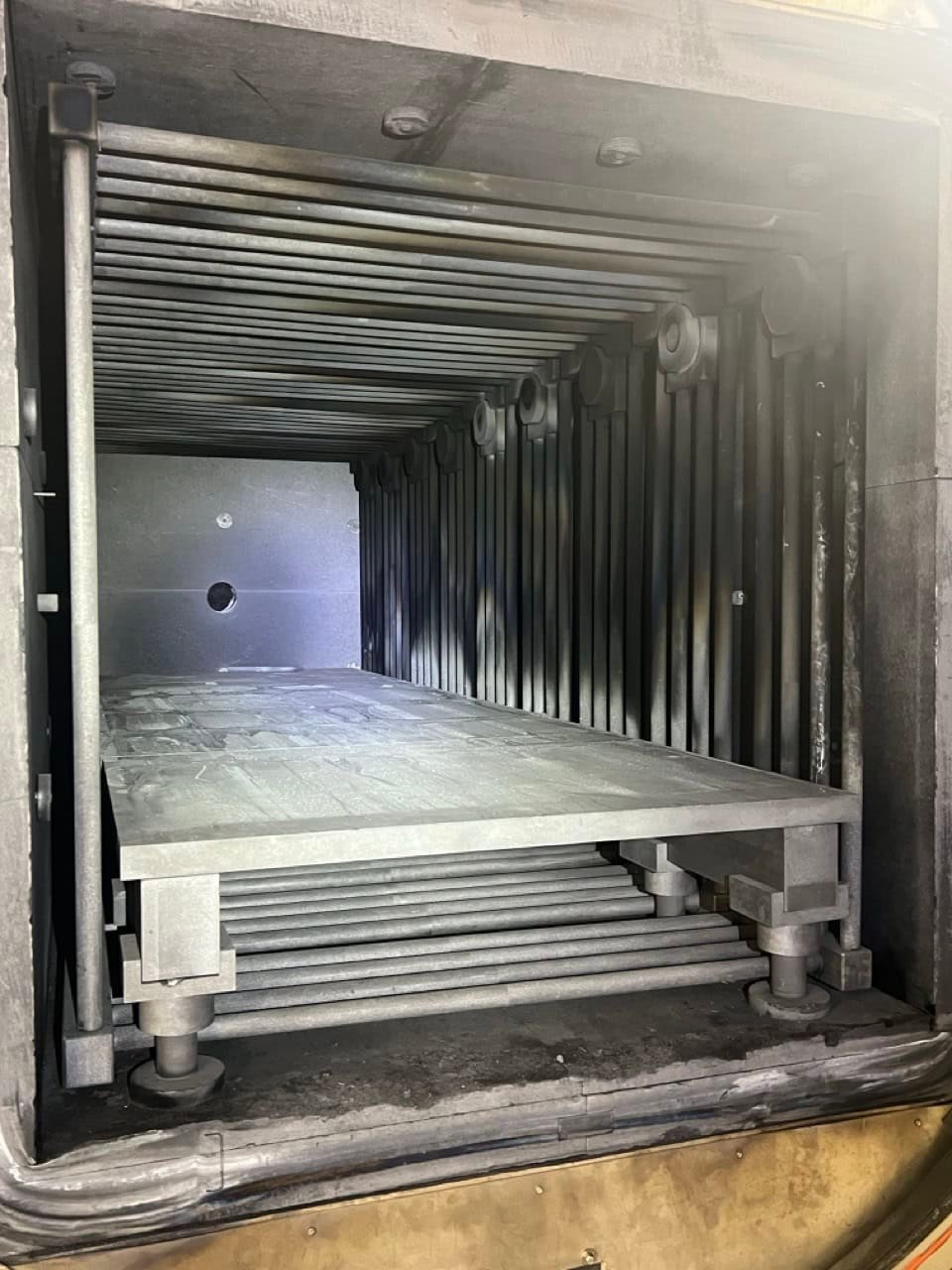
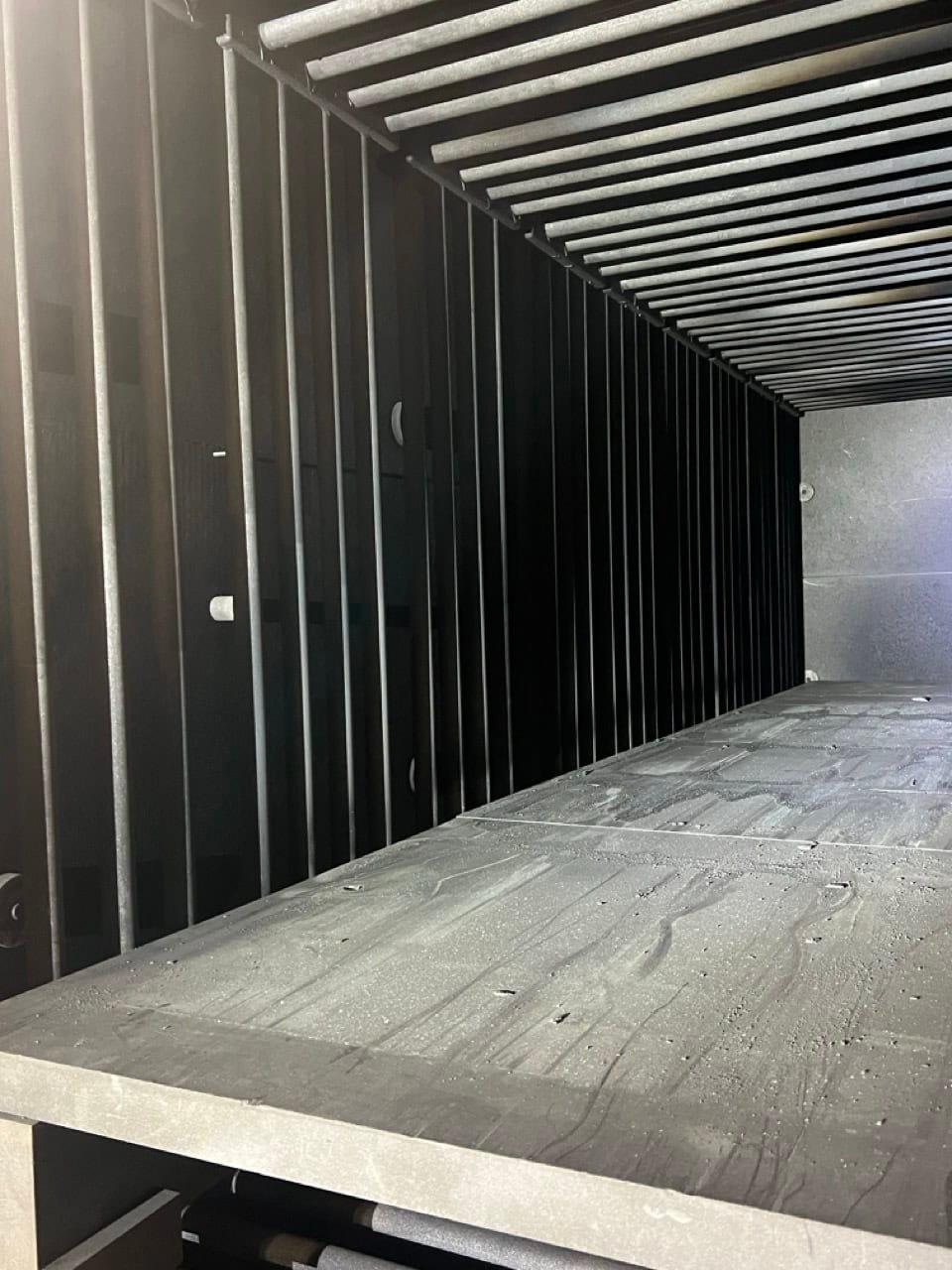
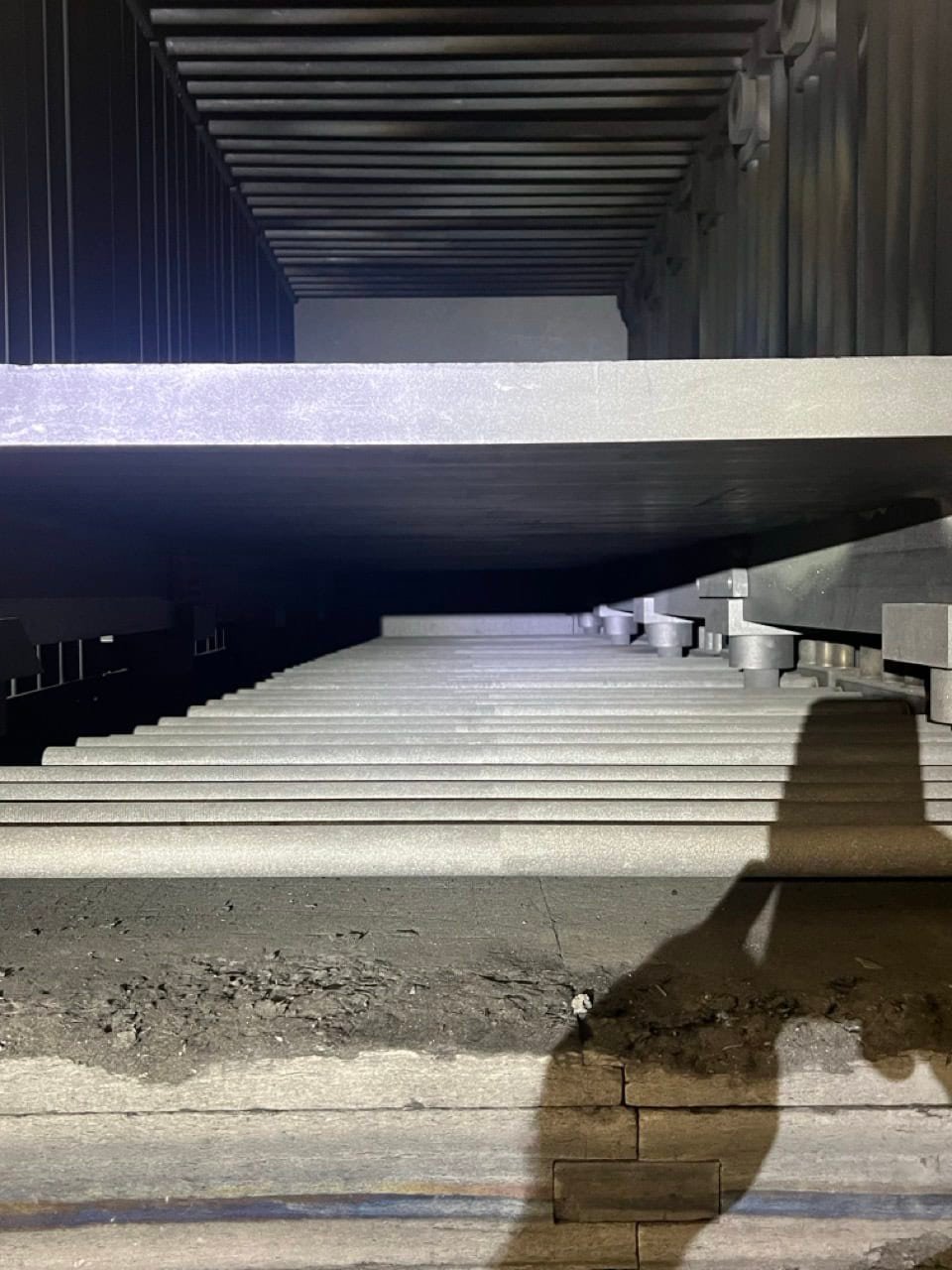
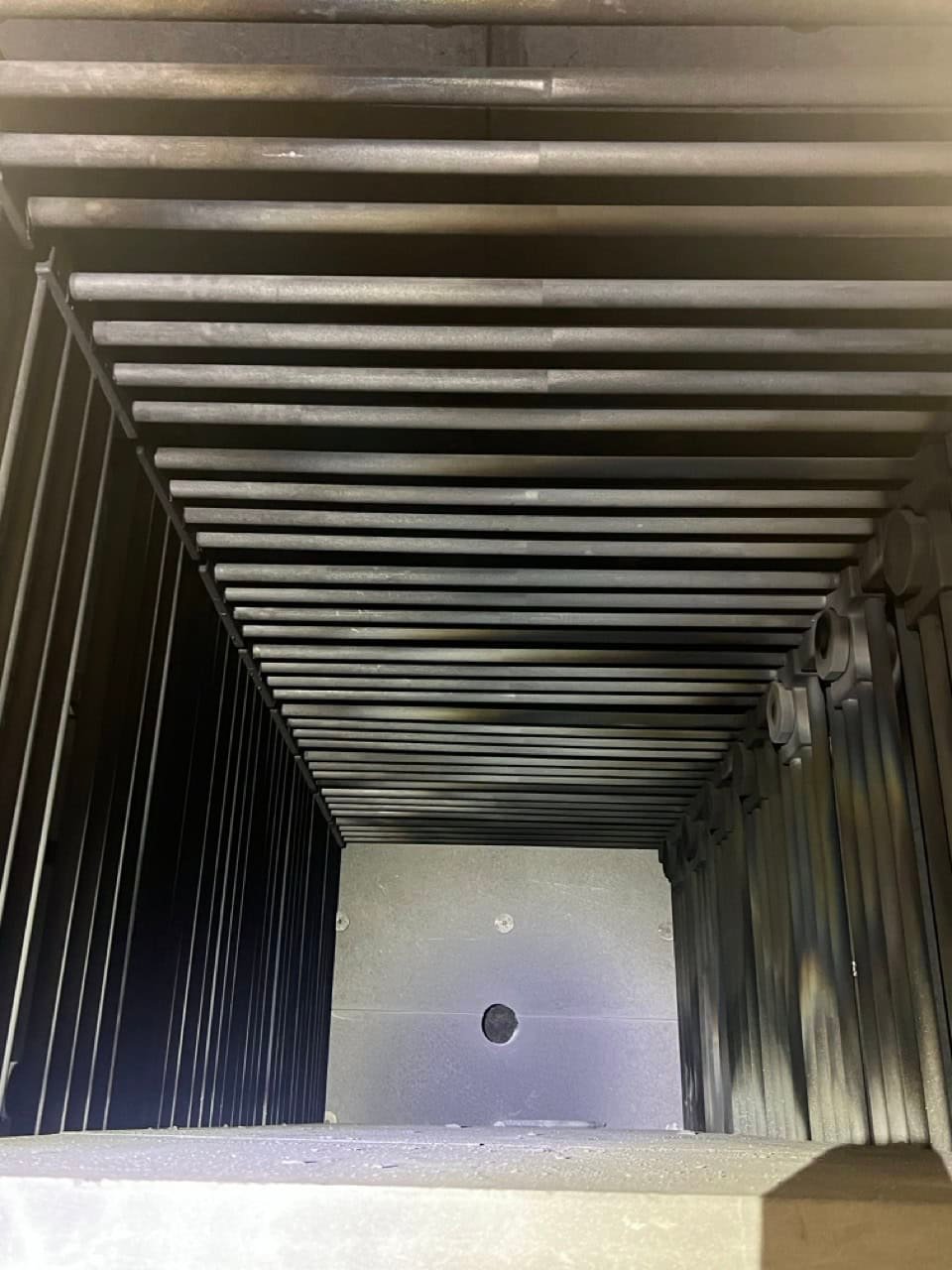
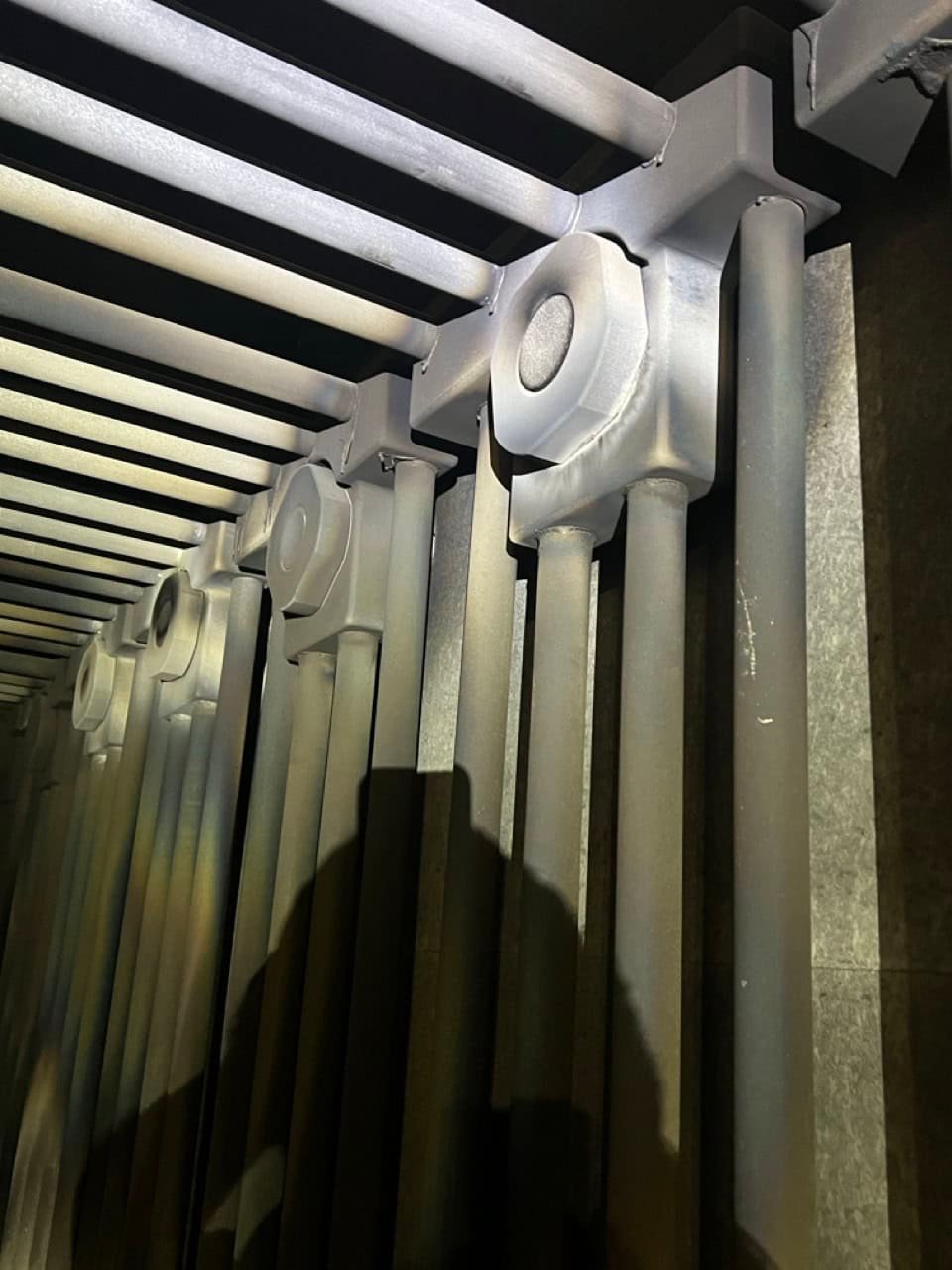
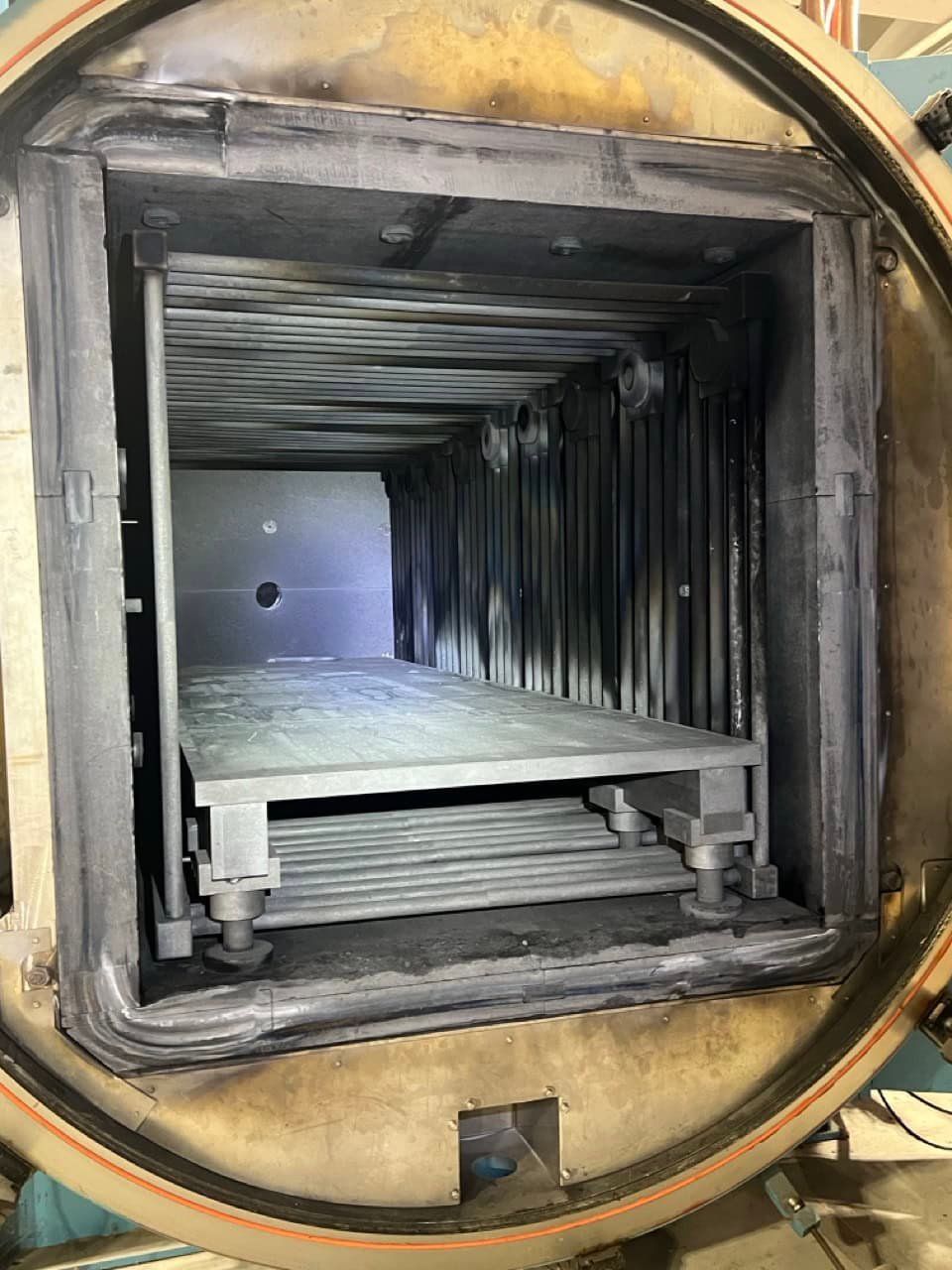
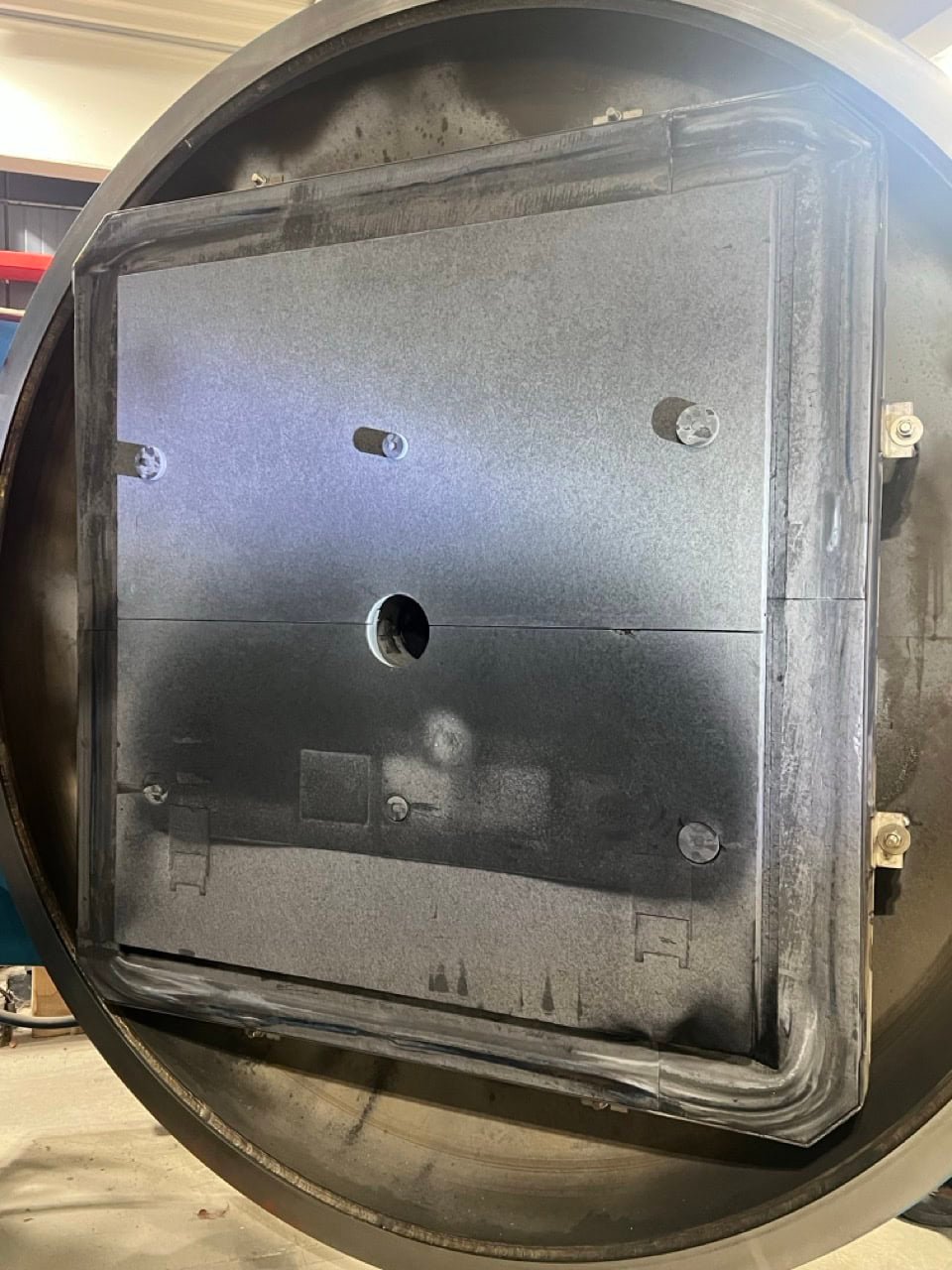
This Graphite Furnace Systems vacuum furnace is a heavy-duty, graphite-insulated batch processing system built for ultra-high temperature performance. The interior chamber contains upper and lower graphite panel arrays, vertically suspended heating rods, and precision insulation tilework. Ideal for thermal treatment of composite tooling, carbon fiber, ceramics, or hard metals, the furnace supports consistent temperature distribution and may operate in vacuum or inert gas configurations.
Chamber & Heating Zone
Chamber Type: Horizontal cylindrical vacuum furnace
Internal Chamber Size: 48″ Diameter × 96″ Depth (est. ±2″)
Hot Zone Volume: ~100 cu ft (2.8 m³)
Heating Elements: Graphite rod, vertically suspended
Heating Zones: Likely 3–5 zones (top, side, bottom)
Element Configuration: Parallel banks w/ panel baffles
Max Temperature: 2200°C – 2500°C (typical for GFS units)
Temperature Uniformity: ±5°C – ±10°C (specs TBD without TUS)
Thermal Insulation: Graphite tile, rigid pressed construction
Hearth: Graphite slab platform on risers
Construction & Mechanical
Furnace Shell: Welded carbon steel, circular endplate
Door Style: Hinged clamshell or swing-latch design
Seal: Graphite gasket + groove w/ vacuum flange
Cooling: Water line inlets (seen on front/base)
Feedthroughs: Thermocouples + electrical (rear piping)
Base: Steel frame mount with floor-level piping
Utilities
Electrical Input: 480V / 3Ph / 100–150A (estimated)
Power Rating: 150–250 kW (typical for this size)
Atmosphere Control: Vacuum or inert (argon/nitrogen)
Vacuum System: Not shown – assumed missing
Controller: Not visible – standard GFS uses Eurotherm or PLC
Chiller Requirement: External closed-loop recommended
Estimated Performance
Cycle Duration: 2–6 hours (application dependent)
Heat-Up Rate: 5–15°C/min typical for graphite systems
Typical Applications: Graphitization, sintering, carbonization
Max Load Weight: ~3000–5000 lb (with uniform load spread)